
🃏
Hungry Hippos: How to Play and Win
Hungry Hippos is a ball-snapping game inspired by the classic hippo party game - unofficial. Timing beats mashing. Rules, tips, and a quiz inside.
▶️ Play Now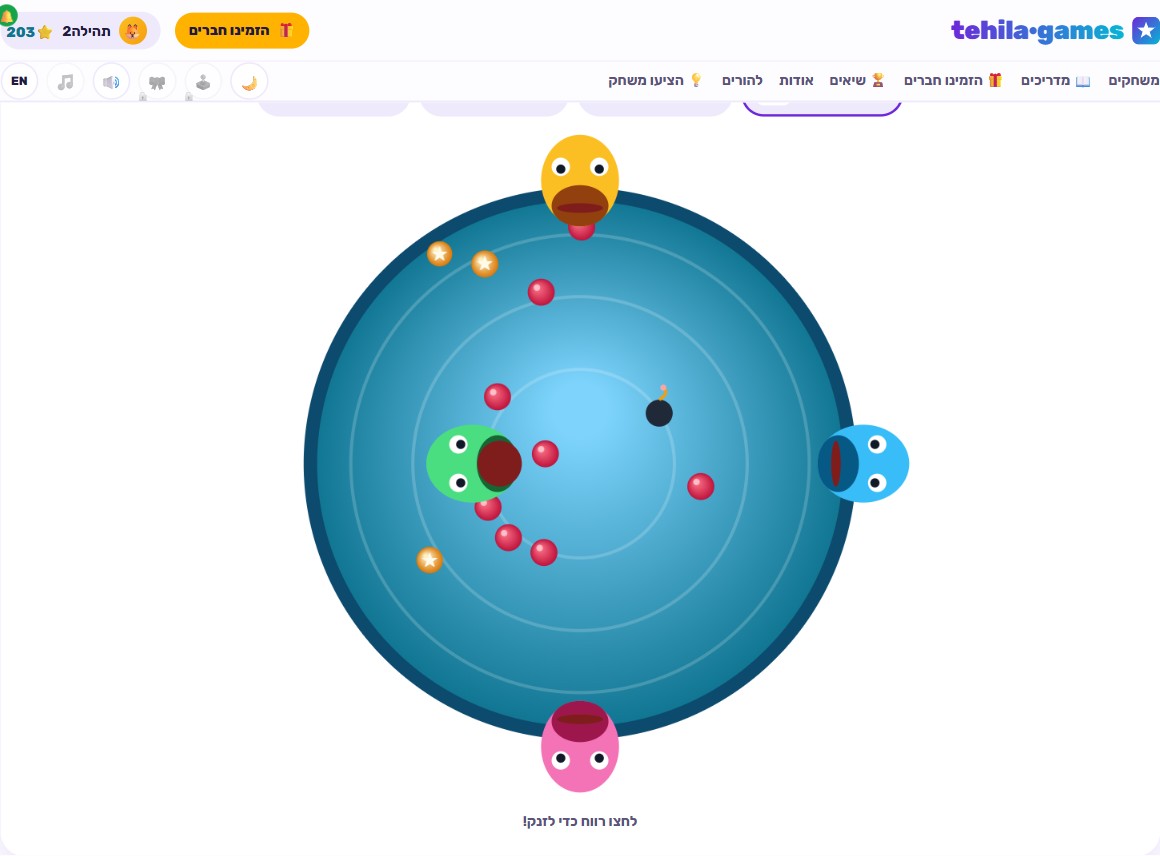
🎯 How to play
- Pick how many human players are joining (1 to 4) - any empty seat is automatically filled by a computer hippo.
- Watch the balls floating toward your hippo and time your snap for the moment one is in range.
- Snap up normal balls for a point each, and look out for gold balls worth three times as much.
- Avoid bomb balls - snapping one costs you two points.
- Don't mash the button non-stop: snapping at nothing stuns your hippo for about 0.8 seconds.
- Survive the 60-second round - whoever has the highest score when time runs out wins.
Where the ball-snapping idea comes from
Hungry Hippos is an independent game built in the spirit of a very familiar idea: a few hippos around a pond, and floating balls you need to snap up at just the right moment. That concept is best known from a famous physical board game that generations of kids have played - but to be clear, this is not an official version of that board game, and it has no affiliation, license, or connection to it or its publisher. This is a completely separate browser game, written from scratch, offering a game “in the style of” that familiar snapping concept - the same way this site has games in the style of Snake or Whack-a-Mole without being official versions of any particular brand.
What carries over from the original idea is the feeling: fast, silly fun, timing that beats raw speed, and a pace that works equally well for a small kid and an adult looking for five minutes of stress-free fun. The digital version costs nothing, never loses pieces under the couch, and runs straight in your browser - alone against the computer, or with up to three friends on the same screen.
The scoring system: stars, win streaks, and the champion achievement
Behind the quick fun there’s a scoring system built to reward improvement over time, not just one good round. In solo mode against the computer, every win adds one to your streak and earns you 25 stars plus three extra stars for every win already in that streak - so the longer your streak runs, the more each additional win is worth. A loss resets the streak straight back to zero. It’s a system that rewards consistency: winning once big isn’t enough, you need to keep the streak alive.
Win three rounds in a row in solo mode and you unlock the “Hippos Champion” achievement - but note the important condition: that achievement belongs to solo mode only. Play in multiplayer with other humans on the same screen instead, and you earn a flat 20 stars for every round you win, with no streak tracking and no way to unlock that achievement through that mode. The logic is simple: against the computer you can measure personal progress over time, while against friends the goal is shared fun, not competing against your past self.
Why timing-and-reflex games appeal to such a wide age range
There’s a good reason games built around precise timing - rather than reading, math, or deep strategy - stay popular for decades and work for such a broad audience. The rules here are dead simple: see a ball, snap at the right moment, score a point. There’s no long text to understand, no prior knowledge required, and barely any gap between an experienced player and a first-timer when the round begins - everyone starts from the same place.
That’s also why the game works equally well solo and in a group. In solo mode against the computer, there’s private space to practice, find your rhythm, and try to beat your last streak. In multiplayer, with up to four real people sharing one screen, the whole feel changes: there’s direct competition, laughs when someone snaps a bomb ball by accident, and a fast pace that fits perfectly at a birthday party or a family game night. Games like this are often great social icebreakers precisely because they’re short, obvious, and need zero explanation before anyone can jump in.
Why mashing the button is actually the wrong strategy
One of the more interesting things about this game - and something that surprises new players - is that the intuitive strategy, tapping as fast and as often as possible, turns out to be the worst one. The reason is a mechanic called the stun: every time your hippo snaps and misses (meaning it snaps at nothing, with no ball in range), it freezes for about 0.8 seconds before it can try again. That’s nearly a full second where you simply cannot catch anything, even if a gold ball worth three points floats right past your hippo’s mouth.
That means a player who mashes the button constantly, hoping one of the taps lands, actually spends a large chunk of every round stunned - and misses exactly the moments when a real ball is passing by. A player who waits, tracks the ball with their eyes, and snaps once at precisely the right moment almost never gets stunned, and stays ready to catch the next ball much sooner. In short: a slower, precise rhythm beats a fast, random one almost every time. That matters even more on the higher computer difficulty levels, where every wasted second of stun time is a second the computer opponents spend racking up points without you.
Three computer difficulty levels - who each one suits
Whenever there are fewer than four human players, the empty seats around the pond are automatically filled by computer-controlled hippos, and you can pick between three difficulty levels that shape how they behave. On Easy, the computer hippos react relatively slowly to balls entering their range, recover slowly from a stun, and miss more often - a good starting point for anyone still learning the game’s rhythm or playing for the first time.
On Medium, the computer improves across the board: faster reactions, faster recovery from a stun, and sharper accuracy about when to snap. This is where real strategy starts to matter, not just basic reflexes. On Hard, the computer hippos barely ever miss a ball that enters their range, recover from a rare stun almost instantly, and react the moment a ball appears. Beating Hard mode takes more than precise timing - it takes smart use of every second, like prioritizing gold balls over normal ones, since a small timing edge can be the difference between 1 point and 3.
Real tips for beating the computer
- Look ahead, not just at your immediate range. Instead of reacting only once a ball is right in front of your hippo, track balls that are about to drift into your range. That extra split-second lets you line up your snap instead of reacting late.
- Prioritize gold balls whenever you spot one. A gold ball is worth three times a normal ball - one clean gold catch is worth exactly as much as three successful normal catches. If you have a choice between a normal ball nearby and waiting a beat for an approaching gold ball, waiting usually pays off.
- Factor the stun into every decision. Before you snap, make sure you can actually see a ball in range rather than guessing. Snapping at nothing costs you 0.8 seconds of being unable to catch anything - a real chunk of a round that only lasts 60 seconds.
- Start on Easy or Medium before jumping to Hard. The rhythm and habits you build on the easier levels are exactly what help you survive the sharp accuracy of Hard mode.
- Remember that bomb balls cost two points, not just a wasted snap. If you’re not sure what kind of ball is approaching, sometimes it’s better to skip an uncertain catch than risk losing points you didn’t need to lose.
Solo mode vs. playing with friends - two different experiences
It’s worth understanding that this game really offers two fairly different experiences depending on how many human players join. In solo mode against the computer, every round becomes part of an ongoing personal challenge: your streak carries over between rounds, every win is worth more the longer that streak runs, and there’s a clear, achievable goal - three wins in a row to unlock the “Hippos Champion” achievement. This mode rewards gradual improvement and practice.
In multiplayer, with two to four real people sharing one screen, the focus shifts entirely to the social experience. There’s no streak tracking and no achievement to chase, just a flat 20 stars for every round you win and a fast, funny round with real people. This is the mode to reach for at parties, family gatherings, or whenever a few friends are in the same room and want a quick head-to-head without explaining a single rule beforehand - everyone picks it up within seconds of watching the screen.
Similar games on the site worth trying
If you enjoyed the speed and competition of Hungry Hippos, check out Hungry Animals - another game built around quick, precise catching, in a similar reflex-and-timing style. Anyone who likes the thrill of fast reactions under pressure will also enjoy Snake, which demands precise, ongoing control rather than a single well-timed tap. And for one more classic snapping game built on reflexes and timing, Whack-a-Mole is a fast, familiar pick that suits exactly the same crowd.
🧠 Test Yourself
Answer all three questions correctly to earn 100 stars!
Frequently Asked Questions
Is Hungry Hippos an official version of the well-known board game?
No. This is an independent game inspired by the general idea of hippos snapping at floating balls, with no affiliation, license, or official connection to the well-known physical board game or its publisher.
What's the difference between the ball types?
A normal ball is worth one point, a gold ball is worth three points, and a bomb ball costs you two points off your score (your score never drops below zero).
Why is mashing the snap button a bad idea?
Every time your hippo snaps at nothing, it gets stunned for about 0.8 seconds before it can snap again. Constant mashing means more misses and more stun time, so it actually leaves you catching fewer balls than careful timing does.
What's the difference between the three computer difficulty levels?
On Easy, the computer hippos react slowly and miss more often; on Medium they react and recover faster with better accuracy; on Hard they react almost instantly, recover from a stun quickly, and rarely miss a ball that comes into range.
How do you unlock the 'Hippos Champion' avatar?
Win three rounds in a row in solo mode against the computer - this achievement is only available in that mode, not when multiple human players are playing together.