
🃏
Simon Says Guide: Rules and Longer Sequences
Simon Says is a growing-sequence memory game - it flashes colors and you repeat them back in order. This guide covers the rules and the champion badge.
▶️ Play Now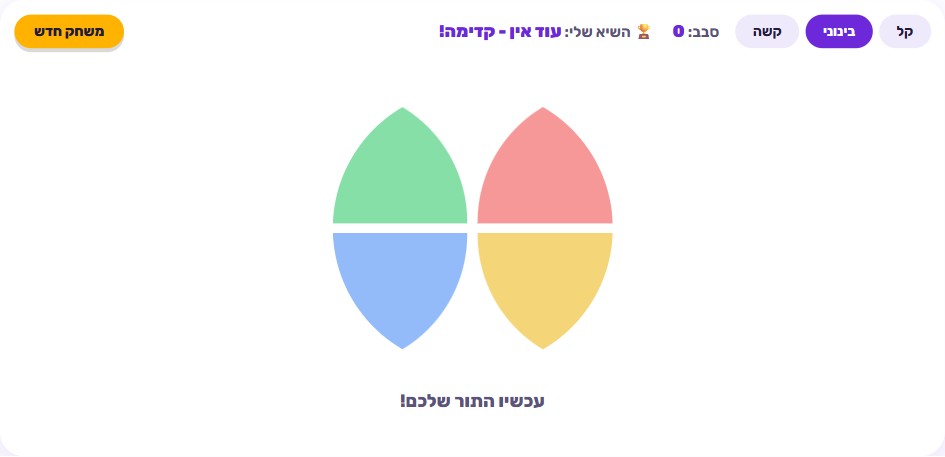
🎯 How to play
- Watch the sequence of colors the game flashes on the board - it's shown only once, so attention matters more than speed.
- Once the sequence finishes, repeat it yourself: click the same pads, in the exact order you saw them.
- Get the whole sequence right, and a new round starts immediately - the game adds one more step to the sequence.
- Keep going: each round the sequence grows by one more step, and the flash speed changes depending on the difficulty you picked.
- Clicking the wrong pad ends the round instantly. Your score is however many steps into the sequence you managed to reach.
- Reach a 15-step sequence within a single run to unlock the "Simon Says Champion" avatar.
Two origins, not one: the command game and the toy
The name “Simon Says” comes from two genuinely different places, and it’s worth knowing both to understand where this digital game comes from. The first is the old, familiar schoolyard game: a leader calls out commands (“Simon says jump!”), and players are only supposed to follow the instruction if it’s prefaced with “Simon says” - anyone who follows a command without that phrase is out. It’s a centuries-old social party game for kids that tests quick listening more than memory, and generations of children have played it in playgrounds and classrooms.
The second, and the one this digital game is actually modeled after, is the electronic toy called “Simon”, released in 1978: a round console with four colored pads that flashes a sequence of lights and tones for the player to repeat back exactly, growing by one step every round. It was one of the first electronic toys to turn “sequential memory” into an addictive, genuinely fun game, and it became a template that’s been copied, adapted, and rebuilt in dozens of digital versions across the internet ever since - including the one on this site. When we call this game “Simon Says,” we’re really borrowing the familiar command-game name for a game that actually plays like the 1978 electronic memory toy.
How the digital version actually works
The idea is simple to explain but takes practice to master: four colored pads sit on the board, and the game lights them up one after another to build a sequence. The sequence is shown exactly once - there’s no replay button - and once it ends, it’s your turn. You need to click the same pads, in the exact same order, without skipping or swapping anything.
Get the whole sequence right, and the game doesn’t stop - it moves straight into the next round and adds one more step to the existing sequence. So round 1 is a single step, round 2 is two steps (including the one from round 1), and so on. The sequence keeps growing until the moment you make a mistake - and only then does the round end. There are no “three lives” and no second chance within the same round: one wrong click stops the run immediately, which is exactly what makes every click matter.
Sequential memory vs. matching memory: not the same skill
Anyone familiar with our memory game (flipping cards to find matching pairs) might assume Simon Says is “the same thing” with colors instead of cards. That’s not quite right. The memory game trains spatial memory - remembering where things are on a board, with no fixed order to check them in. Simon Says trains something different: sequential memory - the ability to remember not just what happened, but in exactly what order. These are two separate parts of the same working-memory system, and kids (and adults) can be strong in one and weaker in the other.
Sequential memory is exactly the skill used to remember a phone number, an address, or multi-step directions (“first left, then straight, then right by the park”). That’s why teachers sometimes use games like Simon Says as informal practice for sequential working memory, the same way matching games are used to practice spatial memory. Both skills matter - they’re just different.
Three difficulty levels - what actually changes between them
Here’s a point worth understanding clearly, because it isn’t intuitive: the three difficulty levels (Easy, Medium, Hard) do not control how long the sequence gets. The sequence always starts at one step and keeps growing without limit, on every level. What changes is the pace - how fast each pad flashes, and how much time passes between one flash and the next.
On Easy, the flashes are slow and the gaps between steps are clear, giving you time to “process” each color before the next one arrives. On Medium, the pace picks up and you already need to track things more quickly. On Hard, the flashes are fast with short gaps, so even a fairly short sequence can feel challenging simply because it’s harder to catch each color while it’s shown. The practical takeaway: if you’re learning the game’s rhythm, start on Easy - not because the sequence is shorter there, but because you get more time to process each step.
How scoring and stars work
Scoring is simple once you understand it: your score is the last round you fully completed - in other words, the sequence length minus one, since the mistake that ended your run happened on the exact step you’d just added and got wrong. If you reached an 8-step sequence and missed on step eight, your score is 7 - the last round you actually completed successfully.
The stars you earn at the end of a run are calculated directly from that score: the number of stars equals the round you reached, times four. That means every extra step you manage to add to your personal best is worth four more stars - so practicing toward even a single extra step genuinely pays off.
The “Simon Says Champion” avatar - how to unlock it
The site has a dedicated achievement for players who truly master this game: the “Simon Says Champion” avatar, unlocked by reaching a 15-step sequence within a single run. It’s worth noting that this has to happen in one continuous run, not by restarting the game repeatedly and adding up steps over time. Fifteen steps is more demanding than it sounds - it means remembering the order of 15 different colors in a row, while the flashes move at whatever pace your chosen difficulty level sets.
It’s a realistic goal with practice, especially if you start on Easy mode to learn the technique below before attempting it at a faster pace. It’s also the kind of achievement worth aiming for once the game already feels familiar, rather than on your very first try.
Real tips for remembering longer sequences
- Say the colors out loud, or at least in your head. Instead of trying to “see” the sequence again purely with your eyes, label each color with a word as it flashes (“red, blue, green”). Words are stored in memory differently than images, and combining both is stronger than relying on either alone.
- Break the sequence into small chunks. Instead of trying to remember 10 steps as one long list, think of them as pairs or triplets (“red-blue, green-yellow, red-green”). The brain remembers small groups far more easily than one long continuous list - this is a well-known technique called chunking.
- Start on Easy to learn the pace. Before chasing a high score on Hard mode, play a few rounds on Easy to get used to the timing and the gaps between flashes.
- Don’t rush your clicks. There’s no clock ticking while you answer - the only pressure is remembering correctly, not answering fast. Take an extra moment to be sure of the order in your head before you click.
- Play several short rounds back to back. Sequential memory, like any skill, improves with repetition - after a few rounds in a row you’ll notice you “feel” the rhythm better and rely less on consciously thinking through every step.
Similar games on the site worth trying
If you enjoyed the sequential-memory challenge of Simon Says, check out the Memory Game - it trains a different kind of memory, spatial memory for positions on a board, rather than the order of a sequence. If you’d rather practice number recall and focus specifically, Number Grid trains fast recognition rather than memory alone. And for a completely different kind of fast challenge - knowledge instead of memory - Flash Quiz is a quick trivia test racing the clock.
🧠 Test Yourself
Answer all three questions correctly to earn 100 stars!
Frequently Asked Questions
What's the actual difference between the three difficulty levels?
The three levels (Easy, Medium, Hard) don't change how long the sequence gets - it always starts at one step and keeps growing on every level. What they control is the pace: how fast each pad flashes and how much time passes between flashes. Hard mode flashes faster with shorter gaps, so even a shorter sequence feels harder to follow.
What exactly ends a round?
A round ends the instant you click the wrong pad - one mistake is enough. There are no extra lives or a health bar, so it pays to wait until the whole sequence has finished flashing before you start clicking back.
How is the score calculated?
Your score is the last round you fully completed - in other words, the sequence length minus one, since the mistake happened on the exact step you added and got wrong. Stars are calculated from that round number times four, so every extra step you add to your best run is worth four more stars.
How do you unlock the "Simon Says Champion" avatar?
You need to reach a 15-step sequence within a single run, without restarting along the way. It takes real focus and a trained memory, but it's a realistic goal after some practice.
Is this game for kids only, or can adults enjoy it too?
It works for every age. It's filed under fun and thinking games on the site, and Hard mode gives even an experienced player a genuine challenge.